

Trust Everything, Everywhere
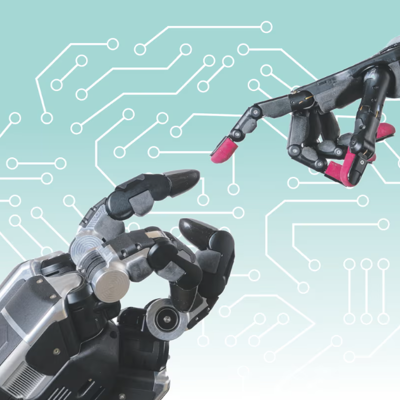
Trust 'building blocks', like encryption, enable digital industries to flourish securely, but they don't extend into the physical world. With emerging technology blurring the line between digital and physical, a new trust infrastructure that straddles both worlds could unlock cyber-physical markets.
Pre-programme discovery projects
To help guide our thinking and shape the programme’s development, we funded a series of short, exploratory research projects running from December 2025 to February 2026. These projects range from exploring aspects of Arena design, diving into topics around physical trust and AI security theory, and running community events such as a hackathon.
TA1 + TA2 | Developing new sensing systems and pushing to rapid deployment
These 16 teams will design an affordable, sustainable and just sensing system that addresses our unmet observational needs in challenging polar environments. Then, through a coordinated multi-year field campaign, they will deploy existing and new sensing systems targeted at the Greenland Ice Sheet and the Subpolar Gyre.
ICEBERG: Integrated Cryosphere Environmental Baseline Exploration and Remote Geosensing
Peter J. Christopher, Sal La Cavera III, Connor Taylor, + Benjamin Newsome-Chandler, Ryme + David Grys, Innotronics
Arctic DronePort
Mathieu Johnsson, Marble
GAMB2LE: Greenland Automated Mass Balance and Boundary Layer Experiment
Ryan Reynolds Neely III, Sarah Barr, Heather Guy, University of Leeds and the National Centre for Atmospheric Science
FULL-OCEAN-FIBRE: Novel depth-resolved and ocean-wide sensing using subsea cables to enable a sustained early warning system for the Subpolar Gyre
Carl Spingys, National Oceanography Centre
Oshen-SWARM: Scalable Waterborne Autonomous Research Modules
Anahita Laverack, Oshen
GRAIL: Greenland Ice sheet to Atlantic tipping points from Ice Loss
Kelly Hogan, British Antarctic Survey
AEROSTATS: Aerial Experimental Remote sensing of Ocean Salinity, heat, advection and Thermohaline Shifts
Christine Gommenginger, National Oceanography Centre
OTTER: Exploiting optical turbulence as part of a climate tipping point early warning system
Ollie Farley, Durham University
POLEMIX: Autonomous profiling observations to unravel the role of mixing in North Atlantic climate tipping points
Bieito Fernández Castro, University of Southampton
TUNU
Anders Læsøe, ASIAQ
Optical Geophysical Sensors Networks for Ocean Monitoring
Martin P.J. Lavery, The University of Glasgow
CryoWatch
Steve Tate, Voltitude
Discovery projects demo day
We hosted a demo day to provide our pre-programme discovery teams with an opportunity to present their findings.
Featured insights
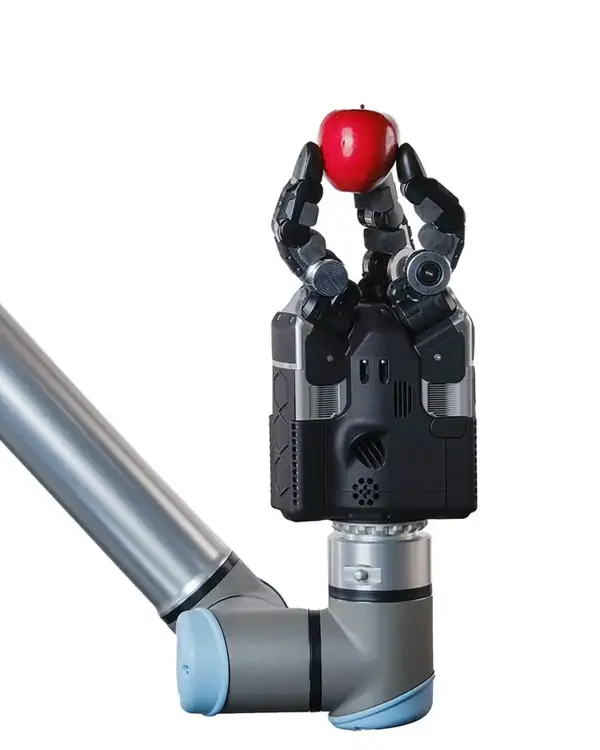
Robots to be given tactile ‘skin’ and dexterous hands
The Observer
A startup working on tactile robotic “skin”, allowing machines to feel objects rather than relying on vision, is among nine projects that received £23.3m in government funding to solve the problem of robot dexterity.